How to Look and Sound Confident in Interviews (Even If You're Not)
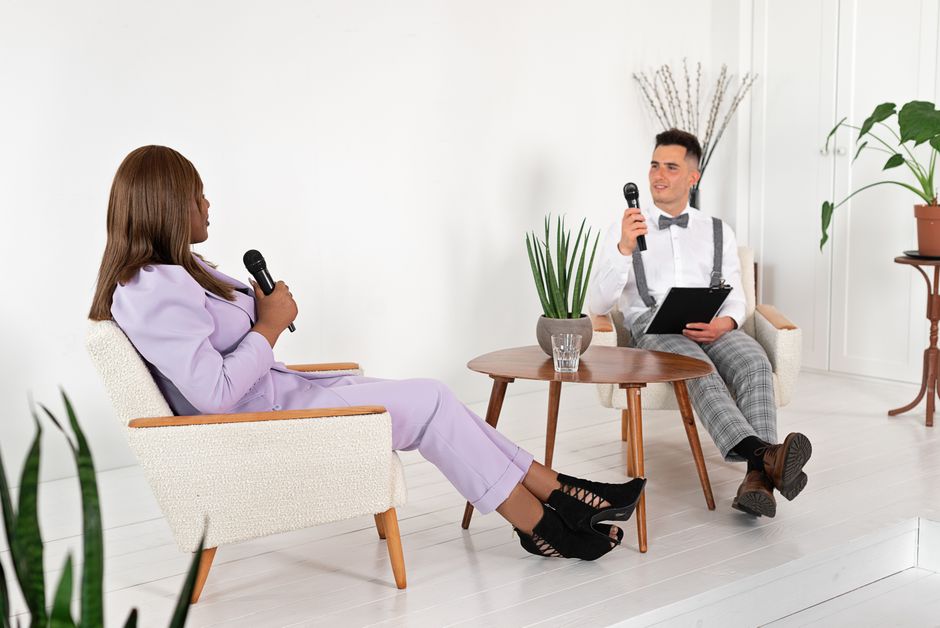
Here's the truth about interview confidence: you don't need to feel confident to appear confident. The gap between internal anxiety and external composure is bridgeable with specific, repeatable techniques that work in minutes, not months.
For tech professionals, this matters more than ever. In a LinkedIn survey of hiring managers, 67% said they decided against otherwise-qualified candidates due to poor eye contact, weak handshakes, or visible nervousness. The good news? These are mechanical skills you can practice, not innate traits you either have or don't.
This guide covers the physical, vocal, and mental techniques that project confidence immediately—even when you're battling nerves—so you can focus on showcasing your technical expertise rather than managing your anxiety.

The Three-Second First Impression Framework
Research from Harvard University shows interviewers form lasting impressions in the first three seconds of meeting you. That window closes before you've said a word. Here's how to control it:
Pre-Entry Reset
Before entering the interview space (physical or virtual), execute this 30-second sequence:
- Roll your shoulders back twice – this opens your chest and corrects the forward hunch from screens
- Take three diaphragm breaths – inhale for four counts, hold for four, exhale for six
- Smile genuinely once – even alone, this triggers a micro-dose of dopamine and relaxes facial tension
- Review your one-sentence anchor – "I solve [specific problem] for [type of company]" grounds your identity
The Physical Entrance (In-Person)
| Nervous Behavior | Confident Alternative | Why It Works |
|---|---|---|
| Rushed walk, fidgeting hands | Moderate pace, arms relaxed at sides | Signals you're not intimidated by the space |
| Weak handshake, breaking eye contact | Firm two-second shake, maintain eye contact through greeting | Matches their energy level, creates equality |
| Apologetic smile, hunched shoulders | Neutral-to-warm expression, upright posture | Avoids submissive body language cues |
| Asking permission ("Where should I sit?") | Reading the room, choosing confidently | Demonstrates decisiveness and social calibration |
The Virtual Entrance (Video Interviews)
Your on-screen presence communicates before you speak. Set these up before the call:
- Camera at eye level – laptop on a stack of books; looking down creates a submissive angle
- Light source in front of you – window or lamp facing your face, never backlit
- Neutral background – bookshelf or plain wall; avoid virtual backgrounds that lag or look artificial
- Test your framing – head and shoulders visible with a hand-width of space above your head
Join two minutes early, but stay muted and camera-off until the scheduled time. Arriving early shows preparation; being on-screen early looks anxious.
Voice Control: The Confidence Multiplier No One Teaches
Your voice undermines or amplifies every word you say. Tech professionals especially struggle here because technical conversations reward precision over vocal presence. In interviews, both matter.

The Pace Problem
Nervous speakers speed up. Confident speakers slow down and pause. Record yourself answering a common question ("Tell me about yourself") at your natural pace, then play it back. Most people are shocked to hear they sound rushed.
Practice this exercise: Answer the same question, but pause for two full seconds after each sentence. It will feel uncomfortably slow. It will sound perfectly paced to listeners.
Key Takeaway: Silence is not dead air—it's processing time. Confident people pause to think. Nervous people fill silence with filler words ("um," "like," "so") or rushed speech. Embrace the pause.
The Four Vocal Adjustments That Work Immediately
- Drop your pitch slightly – nervousness raises vocal pitch; consciously lower it by humming your lowest comfortable note before speaking
- Speak from your diaphragm – place one hand on your belly; it should expand when you inhale, not your chest
- End sentences on a down note – upward inflection (valley-girl uptalk) makes statements sound like questions
- Increase volume by 10% – most nervous speakers go quiet; slightly louder = more assertive (not shouting, just projecting)
If you're interviewing remotely, do a 60-second vocal warm-up before the call: read a paragraph out loud, exaggerating your enunciation and volume. Then speak normally—you'll sound clearer and more grounded.
Handling the "Uhhhh" Moments
When you don't know an answer or need to think, your filler-word instinct kicks in. Replace "um" with these confident alternatives:
- "That's a good question. Let me think through that."
- "I want to give you an accurate answer—give me one second."
- "I haven't encountered that exact scenario, but here's how I'd approach it."
The first two buy you 5-10 seconds of thinking time and signal thoughtfulness. The third reframes ignorance as problem-solving ability.
Body Language: The Silent Confidence Signals
According to research published by Harvard Business Review, 55% of communication impact comes from body language, 38% from tone of voice, and only 7% from words. You can say the right things and still lose the room with closed-off or nervous gestures.
The Neutral Power Position
Start every interview seated in this baseline posture, then return to it whenever you feel yourself tensing:
- Feet flat on the floor – no leg crossing or ankle wrapping (creates tension and looks smaller)
- Back against the chair – leaning forward looks eager-to-please; leaning back looks arrogant; vertical is neutral
- Hands visible – on the table or armrests, not clenched or hidden in your lap
- Shoulders down and back – check this every few minutes; stress pulls them up toward your ears
Strategic Movement vs. Nervous Movement
| Nervous Gesture | What It Signals | Confident Alternative |
|---|---|---|
| Touching face, hair, neck | Anxiety, self-soothing | Hands resting on table, occasional purposeful gestures |
| Pen clicking, paper folding | Impatience, nervousness | Hands still or taking structured notes |
| Constant nodding | Over-eagerness, people-pleasing | Single nod to acknowledge, stillness while listening |
| Crossed arms | Defensiveness, closed-off | Open posture, hands on table or lap |
| Looking at notes constantly | Unprepared, memorizing script | Brief glances for reference, primary focus on interviewer |
Eye Contact Without Staring
Maintain eye contact for 3-5 second intervals, then briefly glance away naturally (to your notes, to think, to gesture). Return to eye contact when making key points. In panel interviews, distribute your eye contact: 70% to the person asking the question, 30% to others.
For video interviews, look at the camera lens (not the screen) when answering. Look at the screen when listening. This creates the illusion of eye contact without constant, awkward staring.
Mental Techniques: Reframing Nervousness as Readiness
Physical and vocal techniques manage symptoms. Mental reframing addresses the source. The goal isn't to eliminate nervousness—it's to reinterpret it.
The Preparation Anchor
Confidence comes from evidence, not affirmations. Before the interview, write down three specific examples that prove you can do this job. Format them as achievement bullets (if you need help structuring these, see How to Write Achievement Bullets That Beat ATS and Impress Recruiters).
When nervousness spikes, mentally reference these three examples. You're not faking confidence—you're reminding yourself of evidence that you're qualified.
Reframe Anxiety as Activation Energy
Nervousness and excitement produce identical physical symptoms: elevated heart rate, shallow breathing, heightened alertness. The difference is your interpretation. Before the interview, say out loud: "I'm excited for this conversation," not "I'm nervous." Your brain can't tell the difference; the reframe reduces cortisol.
The "They Need to Impress Me Too" Mindset
Interviews are two-way evaluations, but anxiety makes you forget that. You're assessing whether they deserve your skills and 40+ hours per week. This isn't arrogance—it's accurate framing. Companies in both the US and Canada are competing for experienced tech talent.
Write down three questions you genuinely want answered about the role, team, or company. Asking thoughtful questions shifts the power dynamic and reminds you that you're evaluating a mutual fit.
Putting It All Together: The Pre-Interview Checklist
Use this sequence 30 minutes before any interview:
- Physical reset: 5-minute walk or stretching to discharge nervous energy
- Vocal warm-up: Read a paragraph out loud, focusing on pace and enunciation
- Review your three proof points: Specific examples that demonstrate you can do this job
- Set up your space: Camera angle, lighting, background (for virtual); planned route, outfit check (for in-person)
- Final 30-second reset: Shoulders back, three deep breaths, smile once, review your one-sentence anchor
If you've prepared your answers thoroughly (see 8 Interview Mistakes Tech Professionals Make (and How to Fix Them) for common pitfalls), these confidence techniques let your preparation shine through instead of being obscured by nervousness.
After the Interview: Maintaining Momentum
Confidence doesn't end when the interview does. Your follow-up communication continues the impression you've built. A well-crafted follow-up message reinforces your professionalism and keeps you top-of-mind (see How to Follow Up After an Interview (Without Annoying Anyone) for exact templates).
Remember: interview confidence is a mechanical skill, not a personality trait. Every technique in this guide is learnable and improvable with repetition. Record yourself in mock interviews, review the footage, adjust one element at a time. Within three practice sessions, these techniques become automatic.
The goal isn't to become a different person. It's to let your competence, preparation, and genuine interest in the role come through clearly—without nervousness distorting the signal. That's not faking confidence. That's demonstrating the professional presence you already possess.
Ready to get your resume in front of hiring managers?
krestium.ai recruiters actively market your resume and track every application.
Start for $200/month →